


Remote Factory Acceptance Testing (FAT)

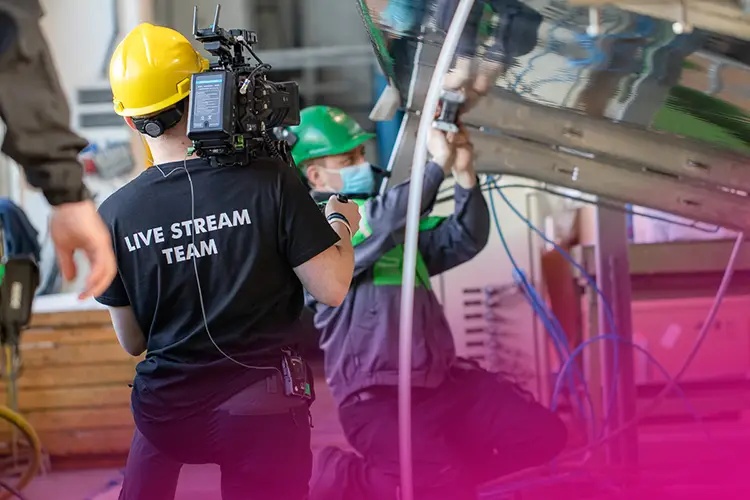
A Factory Acceptance Test often determines whether payment is released, the equipment can be accepted, and shipment can begin. It doesn’t always require flying your team to the factory.
We run remote FATs as a structured live process with a checklist, full interaction, and documentation after testing is complete.
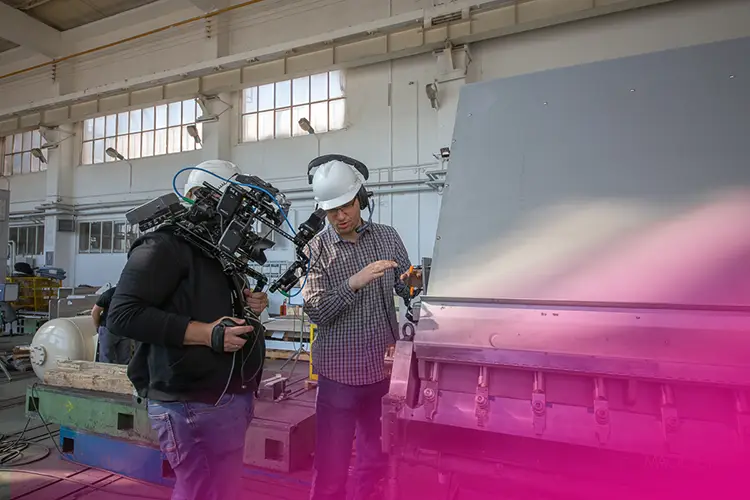
Your team can ask questions, request close-ups, and go through the acceptance step by step, without the chaos of an improvised video stream from the shop floor.
This isn’t a video call from the shop floor. It’s a structured acceptance process backed by evidence.


Who This Is For
We mostly work with machine builders, automation integrators, and companies purchasing production lines:
- building or purchasing machines, production lines, or industrial systems – where the acceptance test determines payment or shipment
- working with clients or stakeholders across multiple locations where getting everyone on-site is expensive or hard to coordinate
- needing remote participants to clearly see the tests, details, machine behavior, and critical checkpoints
- handling sensitive technical data and needing a partner who understands NDAs, access control, and material security
- running multiple acceptance tests in a short timeframe, without multiplying travel costs and team hours
- needing a recording, report, and documentation, they can return to long after the test is complete

Why Remote FAT Drives Results
- Lower travel costs – flying 3–5 people from different countries often costs tens of thousands of dollars. A remote FAT can reduce that expense significantly.
- Faster project progress – a delayed FAT can hold up shipment, payment, and the next stages of the project. A well-run remote acceptance helps keep everything on schedule.
- More experts involved without more travel – engineering, QA, procurement, service, and end-client teams can all participate remotely, without scheduling additional trips.
- A recording that keeps working – footage from the acceptance test can later be used for training, onboarding, service, and internal communication.
- Less risk of disputes – a recording, report, and checklist create an evidence trail you can return to if questions or discrepancies come up.
How We Work - Step by Step
1.
Consultation:
project goals, scope, critical checkpoints, and key decision-makers
3.
Agenda and checklist:
test sequence, camera plan, and control points
5.
Team preparation and dry run:
we show the on-site team how to run the acceptance and test the stream before go-live
7.
Wrap-up:
recording, checklist-based report, and optional highlight reel or time-lapse


2.
Scope and pricing:
location, timeline, working model, and formalities
4.
Technology and security:
cameras, audio, platform, connectivity, IT requirements, and NDA handling
6.
Live execution:
streaming, moderation, interaction, and real-time documentation
1.
Consultation:
project goals, scope, critical checkpoints, and key decision-makers
2.
Scope and pricing:
location, timeline, working model, and formalities
3.
Agenda and checklist:
test sequence, camera plan, and control points
4.
Technology and security:
cameras, audio, platform, connectivity, IT requirements, and NDA handling
5.
Team preparation and dry run:
we show the on-site team how to run the acceptance and test the stream before go-live
6.
Live execution:
streaming, moderation, interaction, and real-time documentation
7.
Wrap-up:
recording, checklist-based report, and optional highlight reel or time-lapse
What Sets Us Apart
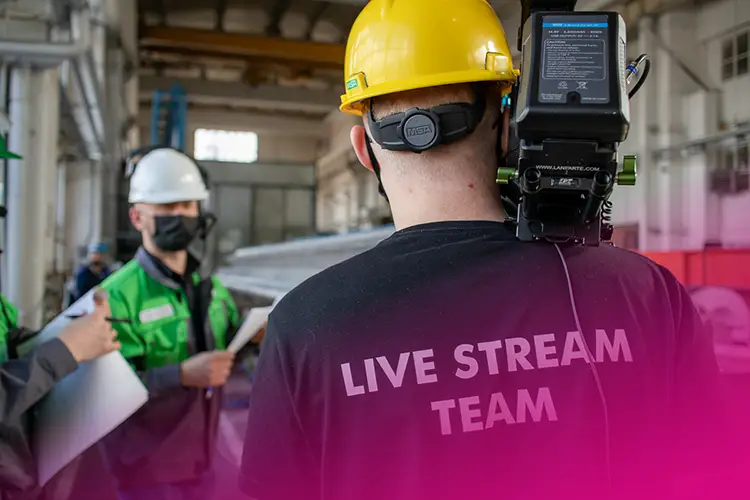
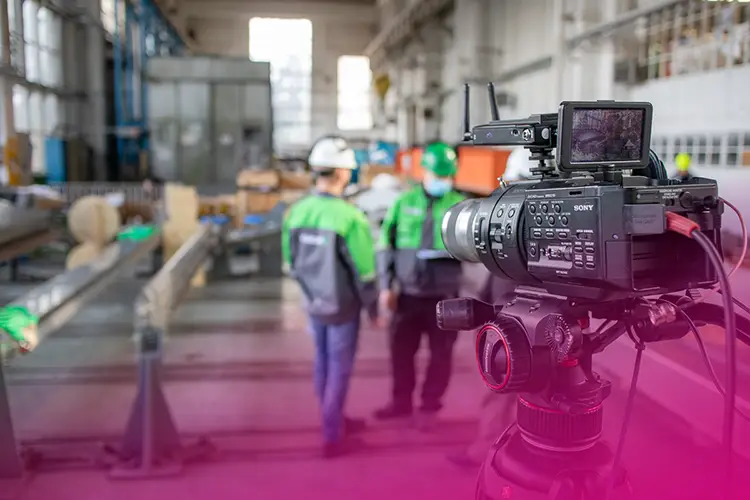
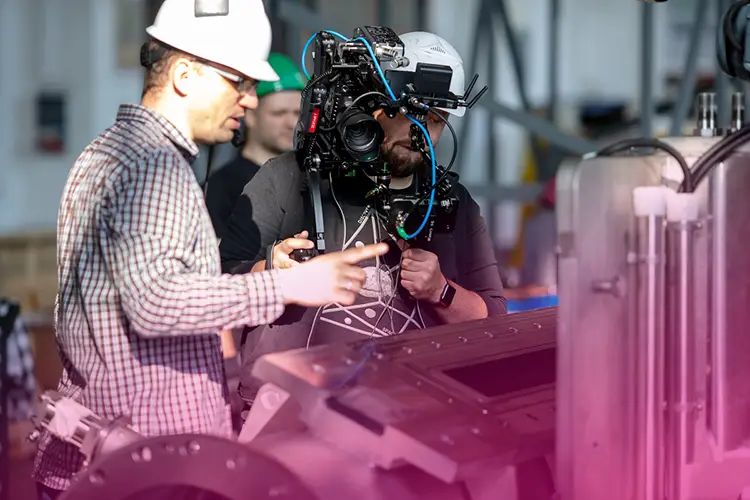
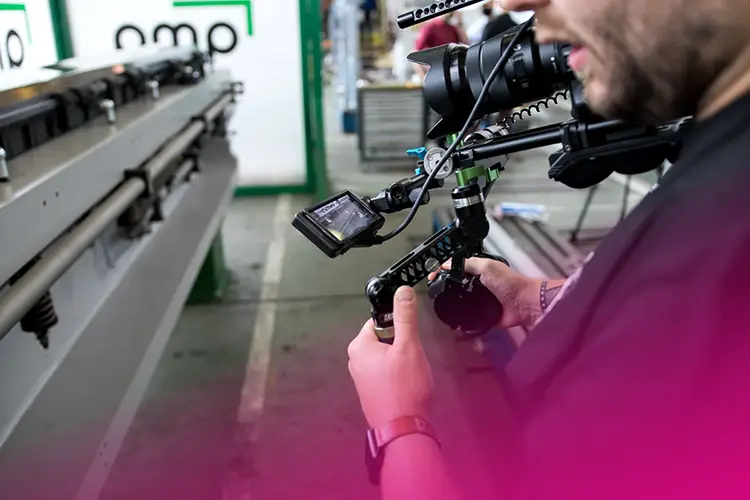
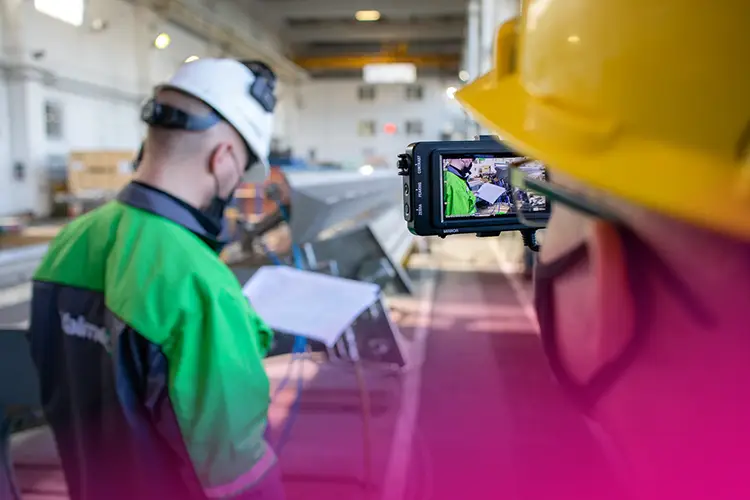
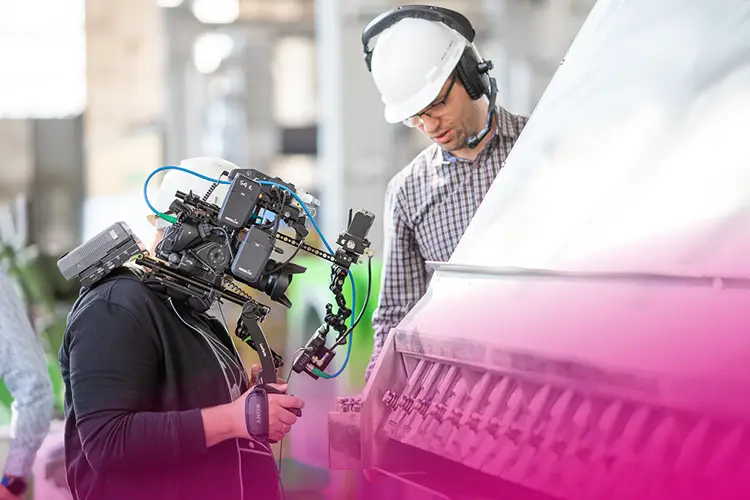
- Dedicated production team – the stream is handled by a dedicated operator, not the engineer running the test. Your technical team stays focused on the machine, not the camera.
- Security as a standard – NDAs, access control, and defined retention rules. We can transfer all materials to your repository without keeping copies on our side.
- A consistent, vetted team – our crew is made up of experienced people, not random freelancers. They understand how production, sales, and client teams work together during an acceptance.
- We work in your IT environment – Teams, Zoom, Meet, VPN. We adapt to your IT requirements without compromising stream quality.
Good to Know:
- Not every acceptance test needs to be fully remote – sometimes a hybrid setup works better: some people on-site, the rest online. If certain tests require physical presence, we'll say so upfront.
- The biggest challenge is rarely the stream itself – more often, it's IT restrictions on the client side. That's why we check access and configuration before the test, not on the day.
- The recording keeps working long after the test – clients use it for onboarding, service, training, and cross-team communication, often for many months.
Not every FAT needs to happen on-site.
Budget & Ways to Work With Us
A remote FAT usually costs less than flying a team to the factory. We adapt the scope and working model to the project:

Full delivery
we manage everything from agenda to final report. The budget is agreed upfront.

Advisory support
we step in where you need us: agenda, equipment selection, moderation. Pricing depends on scope.

Hybrid Setup
some people are on-site, the rest participate online. Project-based pricing.
Where Remote FAT Works Best
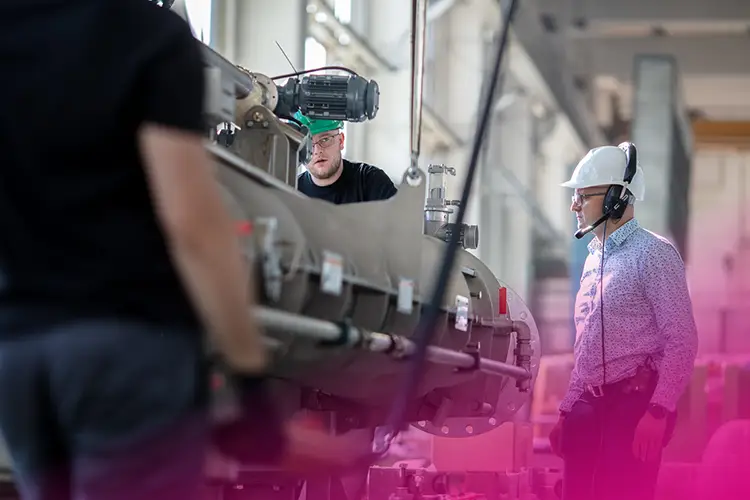
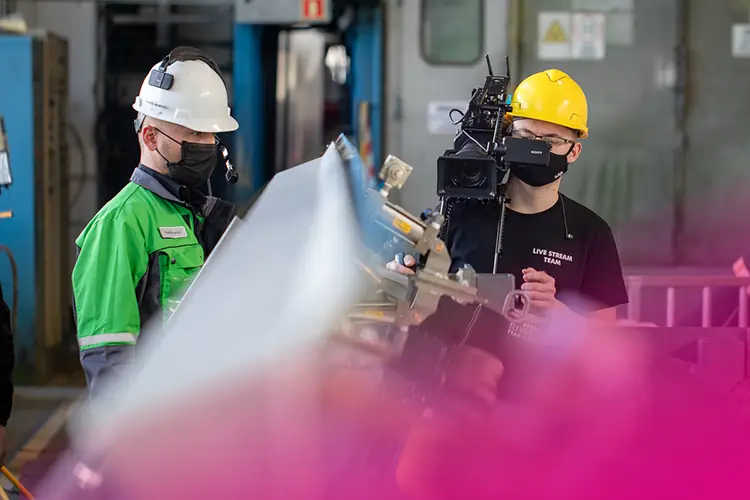
- FAT of machines and production lines before shipment
- Acceptance tests at automation and robotics integrators
- Testing of process systems and industrial installations
- Safety testing – E-Stop, interlocks, guarding, and LOTO
Difficult site conditions – EHS restrictions, restricted zones, limited access
- Hybrid FAT – engineer on-site, decision-makers and experts joining remotely
- Re-tests after corrections – a short remote session instead of another trip
Don’t see your use case here?
Remote acceptance also works for quality audits, inspector visits, and remote verification. Send us a message – we’ll tell you straight if it makes sense for

FAQ
Most common questions
What is a Remote FAT?
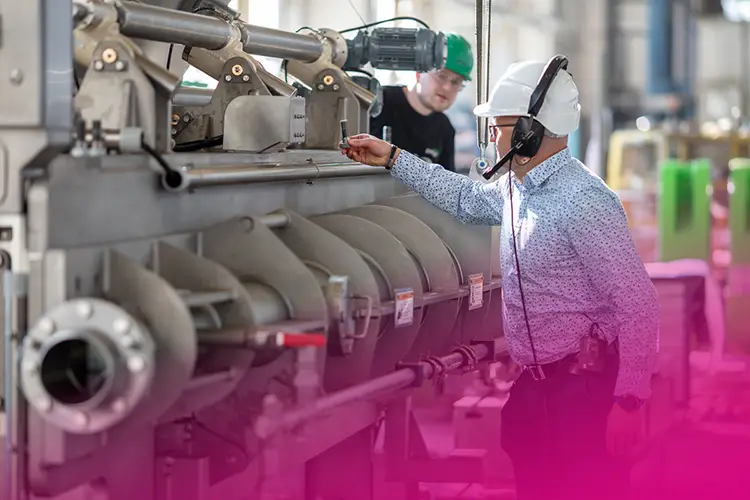
A Remote FAT is a Factory Acceptance Test conducted via live video, without requiring the full team to travel to the supplier’s facility. Participants watch the machine, follow the tests, and review details according to a predefined checklist – in real time.
A dedicated broadcast operator handles the stream, not the engineer running the test. This means the technical team stays focused on the machine while the remote audience gets a clear, moderated view of the process.
After the test, you receive a recording, a checklist-based report, and supporting evidence.
Remote FAT is increasingly used across industries like packaging, pharma, food & beverage, automotive, and industrial automation – particularly when acceptance tests involve international stakeholders.
Can a Remote FAT replace an on-site acceptance test?
In many cases, yes – especially when the key elements are visual verification, functional tests that can be shown on camera, process documentation, and participation of multiple decision-makers.
However, some tests require physical presence: specialized measurements, verification under real production conditions, or tests that depend on direct contact with the machine. In those cases, a hybrid setup often works best – one or two engineers on-site, the rest of the team joining remotely.
Before every project, we help determine which elements can be reliably verified online and which should be left for an on-site FAT or SAT after installation.
We don’t promise that Remote FAT always replaces a site visit. We tell you what makes sense for your specific situation.
How is this different from a regular video call?
The difference is in the process, not the tool. A video call is a conversation. A Remote FAT is a planned process with a defined structure:
- a predefined agenda and test sequence
- a checklist with control points
- a dedicated camera operator who is not the engineer running the test
- live moderation to make sure nothing gets skipped
- the ability to switch views, zoom in, and bring in additional specialists
- a backup plan in case of connectivity issues
- a recording, report, and evidence package after the test
On a typical factory floor call, someone holds a phone in one hand and runs the test with the other. The image shakes, audio is lost in machine noise, nobody tracks the checklist, and afterward all you have are conflicting memories instead of documentation.
In a properly structured Remote FAT, participants can ask questions, request close-ups, return to specific test points, and bring in experts from other locations mid-session. The result is a more controlled, better documented, and more professional process for everyone involved.
Can participants request close-ups and ask for tests to be repeated?
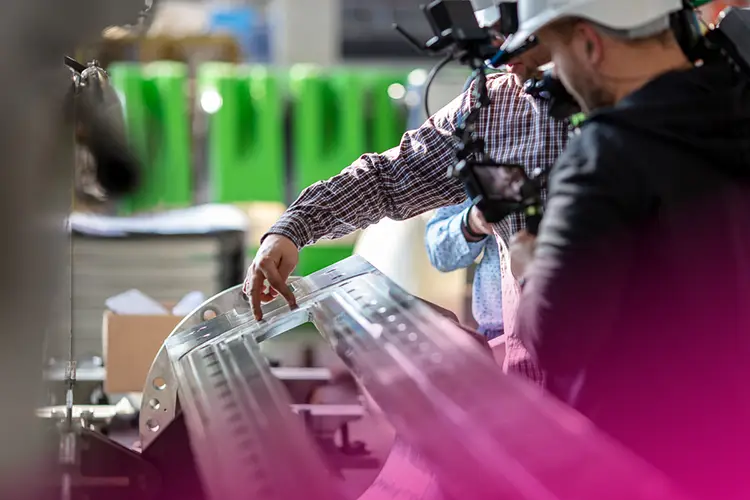
Yes. The acceptance test is fully interactive. Participants can pause the process at any point, request a close-up of a specific component, ask for a test to be repeated, or move to a different item on the checklist.
Before the test, we prepare a shot list together with the client. We identify which elements need detailed coverage: nameplates, wiring, sensors, electrical cabinets, machine reactions, safety devices, and product quality after testing. The client can also flag specific critical points they want to see up close.
The camera operator follows this plan but also responds to live requests from participants. This is not a static single-camera feed – it is a moderated broadcast where the client has real influence over what they see.
How do you handle transmission security and data protection?
Security is defined individually for each project together with the client. This typically includes:
- working within the client’s IT environment – Teams, Zoom, Meet, VPN – or on a dedicated platform with access control
- a participant list confirmed in advance, with no unauthorized access
- NDAs signed before work begins
- recording rules agreed upfront – what gets recorded and what is shown live only
- restricted camera framing to avoid showing other clients’ machines on the factory floor
- defined retention rules – where recordings are stored, for how long, and who has access
After the test, we can transfer all materials directly to the client’s repository without keeping copies on our side.
We do not access the client’s or supplier’s OT network. If the acceptance requires showing HMI or SCADA screens, we work through screen sharing controlled by the on-site engineer or through a camera pointed at the display.
In regulated industries and projects subject to EHS, OSHA, or GxP requirements, we adapt the process to match the documentation and access standards expected in those environments – without stepping into certification or technical validation, which always remains the responsibility of the client’s qualified teams.
Can you work within our corporate Teams, Zoom, or VPN environment?
Yes. If your IT policies require work within a corporate environment – specific accounts, access policies, VPN – we adapt to those requirements.
In practice, the biggest challenge is rarely the stream itself. More often, it is IT restrictions on the client side: blocked ports, missing permissions, or limitations on cameras and recording. That is why we test access and configuration well before the test day, not on the morning of the acceptance.
If standard tools are not sufficient, we can set up a dedicated broadcast environment with controlled access and professional signal distribution.
What if the internet connection on-site is poor?
We plan for this from the start. Before every acceptance test, we check the connection on-site and assess whether it supports stable streaming at the required quality level.
If the connection is weak or unstable, we use fallback options: an alternative internet source, adjusted stream parameters without losing image clarity, or local recording with later delivery.
If the stream drops during the test, we return to the last completed checkpoint, record the missing elements separately, and update the documentation. The acceptance test does not end without usable material.
How long does a Remote FAT take?
Typically between one and three hours, depending on the scope, number of checkpoints, and type of tests involved.
For simpler acceptance tests – a single machine with a short checklist – one session is usually enough. For more complex projects, the test can be split into shorter stages, especially when participants are working across different time zones.
A well-prepared Remote FAT usually runs more efficiently than an improvised video call from the factory floor. A clear agenda, checklist, shot plan, and live moderation help move through the tests without unnecessary pauses, repeated explanations, or confusion about what has already been covered.
We define the timeline during the planning stage so every participant knows how much time to set aside.
How quickly can you set up a Remote FAT?
Simple projects can typically be prepared within a few business days: define the scope, test the connection, prepare the agenda, and run the acceptance.
Projects with more demanding IT environments, multiple camera sources, a large number of participants, or complex on-site logistics require more preparation time. We usually estimate two to four weeks for those.
At the start of every conversation, we are upfront about what is realistic within your timeline. If the deadline is tight, we adjust the scope to make sure the acceptance test can happen without technical issues, confusion, or unnecessary risk.
How much does a Remote FAT cost, and when does it actually make sense?
The cost depends on the scope of the acceptance test, the number of cameras, duration, IT requirements, and whether you need just the stream or full process support with a checklist, moderation, and documentation.
In practice, professionally run Remote FAT projects in Europe typically start around €4,000–€6,000. Projects in the U.S. are often higher due to travel, logistics, insurance, and on-site production requirements.
More complex setups – multiple locations, additional operators, strict security requirements, or advanced documentation – increase the budget accordingly.
And honestly: it does not always make sense.
If the acceptance test is straightforward, involves a single machine, and one person can easily travel to the site and verify everything in a few hours, it is often better to do it the traditional way. We will tell you that directly.
Remote FAT starts to pay off when:
- several people from different locations need to participate
- travel and logistics costs start adding up
- documentation and the ability to revisit test results matter
- the project timeline is tight
- or the recording will later be used for onboarding, training, service, or cross-team communication
In many companies, a professionally run Remote FAT is treated not just as a way to reduce travel costs, but as a faster, better documented, and more reliable way to run the acceptance process – with a clear evidence trail that protects both sides of the contract.
FAQ
Planning an Event, Trade Show, or Conference?
Tell us what you’re trying to achieve. We’ll get back to you to schedule a short, free call – and help you figure out the right format, where to put your budget, and how to approach the project.
Rather just email us?
hello@eventgurub2b.com
