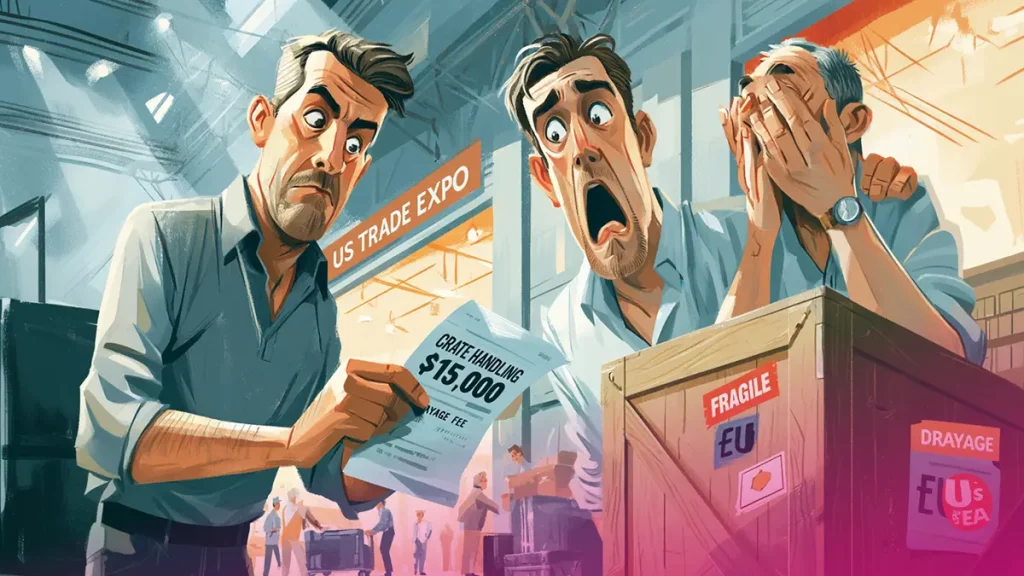
The worst time to find out whether a B2B event made sense is after everything is over: the budget has been spent, the venue is booked, people have shown up, the photos and video are ready, sales has a contact list, marketing has a recap deck, and the board asks: “So what did we get out of it?”
That is when the problem starts, because many events cannot be evaluated honestly with one narrow metric.
A modern B2B event should not be reduced to one lead number. “Let’s invite 300 people and collect 100 contacts” often does more harm than good, because it describes the whole project with a single number that does not show the full value of the event.
A B2B event brings attention, conversations, relationships, and reasons for the next meeting into one place. Three hundred people over two days can mean thousands of hours of attention from the right audience. It can also create customer references, useful assets, trust, and contact with your brand in a setting that is hard to recreate through ads or cold follow-up.
When none of that is planned before the event, the team is left trying to defend the budget with one number afterward.
A strong event can work for sales, marketing, and trust at the same time. It can create real conversations, strengthen relationships with existing clients, reduce the risk of losing them, open new opportunities to grow the cooperation, show a new product or a new direction for the company, bring partners and decision-makers into the room, and create customer stories and assets that would cost a lot to produce separately.
In B2B, advantage rarely comes from one big move. More often, it is built in small percentages: a better conversation, a stronger recommendation, clearer positioning, a stronger follow-up, more trust in the team, and the feeling that the company knows what it is doing.
An event is one of the few formats where these things can happen at the same time.
So the question is not only: “How much did we sell after the event?” A better question is: how much value did this one budget create, and where will that value keep working?
Is your B2B event worth it? It is when one budget creates value in several areas at once. If you look only at direct sales results, you may miss a large part of the value you have already paid for.
1. A narrow goal is fine when it is intentional
Not every event has to work for sales, relationships, content, existing clients, and the brand at the same time. Sometimes one simple goal is exactly what you need.
A small webinar focused on generating leads, a compact booth with a clear sales goal, a closed meeting for existing clients, a product launch for a selected audience, or a workshop for partners can all have one simple purpose. That is fine.
A narrow goal works when it is intentional. It becomes a problem when it is only the result of not thinking through the rest.
The larger the budget and the more people in the room, the less likely it is that one isolated goal will be enough. With a larger event, there are more things you can design around the main goal: from sales conversations to assets and relationships that keep working after the event.
The real loss starts when the budget could have worked harder, but nobody designed it that way.
2. An event should not be reduced to a lead table
In many companies, events are still evaluated as if they were lead campaigns: how many people attended, how many forms were collected, how many contacts were added to the CRM. These numbers matter, but they are not enough.
The problem starts when the table becomes the only proof of value. An event that strengthened relationships, opened partner conversations, gave sales strong customer stories, and brought the right people into one room can look weaker than an event that produced more random contacts.
The issue is not the contact itself. The issue is the moment when the contact list becomes the only evidence of value. The event needs to be evaluated more broadly, because its value does not fit into one table: some of it is created in conversations, some in relationships, some in assets, and some in the trust that remains after the event.
That is why more companies are moving away from treating MQLs as the main proof of marketing value. Forrester points out that in the traditional lead model, less than 1 percent of leads turn into closed deals. That is a useful reminder that the number of contacts alone can be a poor way to describe the real value of the work.
3. Do not ask after the event. Set the value threshold before you spend
A value threshold is a clear list of what needs to happen for the event to be worth the cost. It does not have to be one revenue number. It can be a set of conditions that, together, show whether the event makes business sense.
For one company, the threshold might be several conversations with companies from a priority account list. For another, it might be meetings with existing clients where the cost of losing one client would be higher than the cost of the entire event. For another, it might be recording customer references and stories that sales can use for months. For another, it might be entering a market where trust is hard to build without a physical presence.
A value threshold could look like this:
- conversations with companies that are truly on the priority account list,
- meetings with existing clients where there is a risk of losing the account or an opportunity to grow the relationship,
- partner conversations that can open a new sales channel,
- one or two large open opportunities moved forward,
- a set of customer references, stories, and assets that sales can use after the event,
- partners or sponsors covering a meaningful part of the cost,
- presence in a place where clients, competitors, and industry decision-makers meet.
If you cannot write that threshold in one paragraph, it is not time to sign contracts yet. It is time to define the goal.
That is good news. It is better to stop before spending the budget than to explain after the event that “there were a lot of people and the energy was great,” while nobody knows what that actually means for the business.
4. One budget should create value in more than one place
An event rarely has only one possible effect. You may run it to launch a product, enter a new market, bring existing clients together, accelerate sales conversations, strengthen partner relationships, build market visibility, collect feedback from the market, or create new sales opportunities.
All of these can be good reasons. The problem starts when the whole project is locked inside one goal, and the rest of the value happens by accident or not at all.
If you are launching a product, you can still plan sales conversations, follow-up assets, and customer references. If you are running a relationship event, you can still collect stories that later help the sales team. If you are going to a trade show for new contacts, you can still take care of existing clients, partners, and post-event communication. If you are building the brand, you still need to decide what should remain after the event: conversations, assets, proof of trust, content, or next meetings.
A strong event should have one leading goal and several intentionally designed sources of additional value. When everything is equally important, the project loses focus. When only one area matters, the event usually leaves value on the table.
That is the difference between chaos and strategy.
Chaos sounds like this: “Let’s do a conference, record something while we are there, maybe sales will talk to someone, and maybe we will find sponsors too.”
Strategy starts when you know, before the event, not only what the main goal is, but also what should remain after it. Who do we want to meet? What change do we want to show? Are we presenting a product, a new service, or a new direction for the company? What conversations should this event open? Are we collecting customer references? Are partners adding credibility? Is the communication built around real customer stories instead of generic event slogans?
Same event. Completely different value.
So before planning the format, ask a few questions:
- what is the main goal of this event,
- what else can keep working after the event,
- are we showing a product, service, or change in a way that gives sales a strong reason to follow up,
- can we collect customer references that would be much harder to get outside the event,
- can the communication be built around real customer stories instead of generic claims,
- will sales get the assets, context, and reason they need for follow-up,
- can partners cover part of the cost or strengthen the credibility of the event,
- are breaks and networking designed so that people actually talk to each other,
- should the attendee leave with the feeling that the company is organized, professional, and worth trusting,
- will anything remain after the event beyond photos, a recap deck, and an attendance list.
If the answer to most of these questions is “no,” the event can still happen. It will simply be harder to defend, because you will use only part of the budget’s potential.
5. Attention has value. Customer references do too
The value of event content is not only that “we have recordings.”
People at an event are in a different state of attention than when you ask them for a reference out of context. They see other clients, hear their stories, feel the atmosphere, and talk to people from the industry. In that setting, references, conversations, and customer stories are often more natural and stronger than materials recorded artificially after the fact.
The same applies to branding. A banner with a generic slogan is decoration. Communication built around real customer references, customer stories, and specific product use cases becomes social proof. People do not only see the message. They see that other clients are willing to talk about the company.
Then there is attention.
Three hundred people over two days can mean thousands of hours of attention from the right people, focused on your brand, your product, your clients, your partners, and the way your company works. In a world where marketing is expensive, this kind of attention is one of the most valuable resources a company can earn.
That does not mean you should say “attention is priceless” and stop measuring. The opposite is true. You should ask: what would it cost to earn similar attention through other channels? What would it cost to record similar customer references separately? What would it cost to build similar trust without bringing people together in person?
That is when soft claims start turning into a business decision.

Don’t wait until after the event to ask if it was worth it.
Let’s review the goal, value, and follow-up plan before you commit the budget, so one B2B event can support sales, relationships, content, and brand trust.
6. Events are expensive. Skipping them has a cost too
The second number that is often missing is the cost of the alternative.
Do not ask only how much the event costs. Ask what it would cost to reach a similar result without it. Then the broader value of the event stops being a soft argument and becomes something you can compare.
Put it plainly:
- what would it cost to visit the same clients separately across Europe and the United States,
- what would it cost in sales, executive, and product team time if those meetings were spread across many separate trips,
- what would it cost to produce the same assets and customer references from scratch,
- what would it cost to collect similar feedback from clients, partners, and the market through other channels,
- what would it cost to buy similar attention from the right decision-makers through advertising,
- what does it cost to be absent when your competitor is speaking with your client in person,
- what would it cost to lose an existing client,
- what would it cost to build similar trust without a physical meeting.
In practice, an event does not compete only with an ad campaign or a lead campaign. It competes with a series of separate meetings, trips, presentations, recordings, follow-ups, and attempts to capture the same attention across scattered channels. Once you price that, the event stops looking only like a large expense and becomes one possible way to concentrate many actions in one place and time.
One well-designed event can replace several separate actions that would normally have to be bought, organized, and coordinated separately: client meetings, customer references, sales assets, partner presence, networking, and content for later communication.
The last point is often the hardest to calculate, but it should not be ignored. Harvard Business Review often cites the B2B benchmark that acquiring a new customer can cost five to twenty-five times more than keeping an existing one. This is a benchmark, not a law for every industry, but it shows the scale of the issue: part of the return from an event is not only new revenue. It is also the cost you avoid.
If the event is cheaper and more effective than the sum of those alternatives, you have a strong argument for it. If not, it is better to know before the money is spent.

7. Do not measure only contacts. Look at where else value is created
Before you calculate the return, define one main business goal for the event and a few sources of additional value that you will design intentionally.
The event needs a clear priority. Without one, nobody knows what matters most. But when the event works for only one area, it often fails to use the full potential of the budget.
In practice, you choose one leading goal, and then plan the other sources of value as support, not as accidental bonuses:
- new sales opportunities from the right companies,
- acceleration of active conversations,
- protecting and growing existing client relationships,
- showing a product, service, or new direction for the company,
- feedback from the market that is hard to get from a survey or online campaign,
- assets sales can use after the event,
- partners and sponsors lowering the cost or adding credibility,
- credibility in markets where offline presence builds trust,
- attention from the right people concentrated in one time and place.
The main goal decides the format and how you evaluate the event. The additional value increases the return because the same budget creates value in more places. The key is to design that value instead of hoping it appears by itself.
8. Only then choose the form of the event
The form of the event should follow the job the event has to do. You plan a market-entry event differently than a meeting with existing clients. A product launch is different from a trade show booth, a VIP meeting, a partner workshop, a roadshow, or an executive briefing.
First, define the goal, the value threshold, and what should remain after the event. Only then decide whether the right solution is a conference, a smaller meeting, a roadshow, a trade show, a demo day, an executive briefing, a webinar, a client dinner, or a series of local meetings.
In simple terms:
- a demand-building event works before sales,
- a demand-capturing event helps you reach people who are already closer to a decision,
- a sales-accelerating event moves open opportunities forward,
- a product event shows a new service, a change, or a new direction for the company,
- a relationship event strengthens existing clients, partners, and the community around the brand.
We cover the full breakdown and the right metrics for each type in the guide on how to use B2B events for sales. Here, we use it only as a quick filter for setting the goal, value, and form of the event.
9. When an event becomes expensive decoration
A B2B event becomes expensive decoration when, before spending the budget, you cannot clearly say why you are doing it, what outcome would make it worth the cost, and where value should be created beyond attendance.
The size of the event rarely decides whether it is worth it. More often, it comes down to whether someone clearly named the goal, the value threshold, and what should remain after the event before the budget was spent.
Common warning signs:
| Warning sign | What to do instead of spending the budget |
|---|---|
| You do not have a list of the right people you want to meet | Define the priority companies and client-side contacts before you calculate the cost |
| There is no plan before the event | Design what sales does before the event, not only during it |
| Sales does not know its role | Assign roles and next steps, otherwise the event stays only with marketing |
| You only measure attendance | Replace attendance as the main measure with a value threshold and pre-defined sources of value |
| There is no planned follow-up | Define the owner, timing, and message for post-event contact |
| The event has no business owner | Assign someone responsible for the business outcome, not only production |
| The same goal can be reached more cheaply | Choose the cheaper channel if the alternative cost is lower |
| It is not clear what should remain after the event | Decide whether the event should leave behind conversations, assets, feedback, relationships, partnerships, a shift in perception, or a clear reason for the next step |
| The event leaves behind no assets, conversations, or relationships | Change the format or scope, because presence alone is not enough |
The most expensive events are not always the ones with the biggest budgets. The most expensive events are the ones that have to be defended afterward with vague claims.
“A lot of people came,” “the atmosphere was great,” and “everyone was happy” can be good signs, but they are not enough on their own. If they are not followed by conversations, relationships, assets, follow-up, partnerships, or greater trust in the brand, the event may be nothing more than expensive decoration.
10. The decision: do it, reduce it, change the format, or walk away
The result of this analysis is rarely a simple “yes” or “no.” More often, it leads to one of four decisions:
- do the event, because the value threshold is clear and the alternative cost is higher,
- reduce the scale, because the goal is right but the format is too large,
- change the format, because a VIP meeting, workshop, roadshow, or smaller gathering would work better,
- walk away, because you cannot name the value that would justify the budget.
In practice, the decision often sounds like this: a smaller format instead of a large room, a VIP format instead of an open conference, an event combined with customer story recordings, sponsors brought in, a shorter program, a narrower target group, or money moved from decoration into meetings and follow-up.
When you cannot define the value threshold or name the value the event should create, the right decision is to pause the budget.
11. Summary and next step
You can find out whether a B2B event is worth it before you spend the budget, not after.
Before you spend the budget on a B2B event, check five things:
- why you are doing the event and what the main goal is,
- what value threshold would make the event worth the cost,
- what else can keep working after the event beyond the main goal,
- what it would cost to reach similar results through other channels,
- whether the chosen format is the best way to reach that goal.
Only after that analysis do you decide: do the event, reduce the scale, change the format, or walk away.
A good value test does not always end with “do not do it.” Often, it leads to a better decision: a smaller format, a different target group, added sponsors, or a goal changed from attendance to specific conversations.
Sometimes the answer is a simple, narrow format. Sometimes it is a larger event that intentionally creates value in several areas at once. What matters is that the decision is made before the budget is spent, not explained after the fact.
One more thing: an event that supports sales, relationships, brand, and content at the same time will almost never fit into one number. That is not the goal. The goal is different: to know before you spend the budget exactly what you are paying for, what that value would be worth separately, and whether this event is the best way to create it.
If you have an event on the table and want to check its value threshold before you sign the first contract, let’s talk. We will check whether this format makes sense, whether it would be better to reduce the scale, change the target group, or choose a simpler solution.
Don’t wait until after the event to ask if it was worth it.
Let’s review the goal, value, and follow-up plan before you commit the budget, so one B2B event can support sales, relationships, content, and brand trust.